Showing posts with label interviews. Show all posts

Saturday, 13 July 2013

Digital Canvas Special - Rocketbot.com


In this very special edition of Digital Canvas, I’ll be interviewing my own dear sister to learn more about Rocketbot.com, a site that she’s involved with and thinks that us comic-reading chaps would find interesting!

Todd Marsh: Please give us a brief description of the Rocketbot website for people who haven’t heard of it:

Becky Marsh: Rocketbot is a community site for comic creators/lovers of all ages and skill levels. It’s a place for creators to practise, grow and develop, gaining valuable feedback, hints and tips on making the best of your comic. It’s also a place to share ideas, find like-minded people and collaborate to bring new comics to life.

TM: How is it different from other art-sharing/showcase websites like Deviantart etc?

BM: Where other artistic communities welcome all kinds of art, Rocketbot is just focused on creating comics first and foremost, and all that goes into making comics. It’s difficult on sites like Deviantart to find like-minded people that can help you in a specific area. Rocketbot is all about comics and that’s rather refreshing.

Plus the creators of the site; Gene and Mary, are always on hand to talk to you directly, taking the time to reply with measured suggestions or criticism.


TM: How did you get involved with Rocketbot?

BM: I was lucky enough to already know the co-creator and head cheerleader Gene Kelly through a different site and when he announced his big new website project, I was happy to come along and sign up once Rocketbot had gone live. I am very pleased I did!

TM: Is it an easy site to join?

BM: Perfectly! Anyone can join and what’s more it’s completely free! You can still enjoy the website as a non-member, but membership is needed to upload comics.

TM: And for people who just like to browse, are there any comics or artists you’d particularly recommend?

BM: I’d certainly recommend the top man Gene Kelly himself! An all-rounder with a great sense of humour. His comics (including sibling superheroes Rocket and Bounce) are always impressively done, full of detail, and can always inspire me.

Matt Seniour is another guy who never ceases to amaze me (or make me laugh). His comic Battlecakes is one of my favourites on Rocketbot. Simple, colourful, a great twist on the norm. Trust me you will love this delicious comic!

Or for something a little more serious and mysterious you can’t go wrong with Seyrah’s “The Many Quantum Adventures of Alexandra Byers.” The perspectives, layouts and details in her comics are always pleasing, but what I enjoy most is her amazing storytelling.

TM: The site collectively brought out a graphic novel recently, could you tell us about that? (And where you can get hold of a copy?)

BM: The 1st Rocketbot Anthology was a great way to show off the site’s diversity of comic creators. This anthology was created by the Rocketbot community to highlight the amazing talent and creativity that can be found there. I myself managed to take part, collaborating with Gene to produce “The Explorer”, a short tale about an adventurous girl, her talking monkey and a magic map. It is such an amazing feeling to have your own work out there in print and was such a boost to me when the finished book came through the post. It was also the first time I had worked from someone else’s script. A fantastic learning curve and something I’m looking forward to doing again!

The anthology is available from Amazon: https://www.createspace.com/4107646

TM: Thank you dear sister.

Todd Marsh is paying off Tom Nook one bell at a time.

Saturday, 16 February 2013

Digital Canvas - an interview with Ryan North

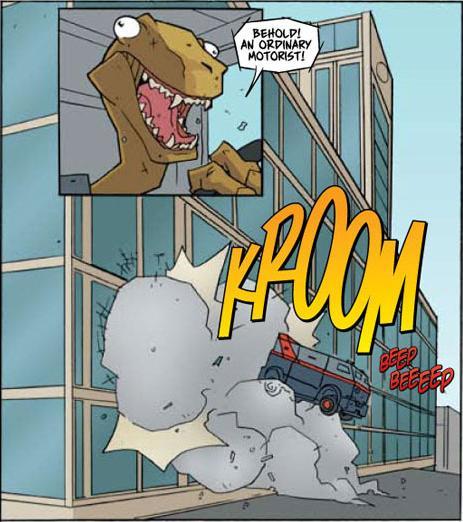
In my continuing efforts to interview creators with the unique perspective of working both in print and web comics, I’ve managed to steal a bit of precious time away from Ryan Q. North, the legend behind the ever popular qwantz.com and the rather superb Adventure Time print comic!


Todd Marsh: So for people who don't know, how did you first get into webcomics?

Ryan North: I started in 2003, when we had a class assignment to "do something interesting with a website". My group didn't really do much so I said "WELL I WANT TO MAKE A COMIC" and put up the first comic over the weekend and that was it!

TM: And how did that lead to writing print-comics? Was one a stepping stone to the other?

RN: Yep! Almost literally. The editor for Adventure Time liked Dinosaur Comics and thought it'd be a good fit. Web comics are great because they're so accessible: people who wouldn't otherwise see your comic can see it. Plus it shows that you can meet a deadline and tell a joke, which I guess are useful skills that editors of comedy comics will look for?

TM: Do you find the different mediums affect how you write? For example with readers seeing one page of webcomic at a time rather than a whole issue of print-comic?

RN: Well yeah, for sure. The medium affects what's being told in lots of ways. The nice thing about Adventure Time (which kills me in ordinary superhero books) is that there's no ads interrupting the story. That's super critical, because that lets you as a writer know what page you're working on AND where it's situated physically on the page. I love to know if the next page is already visible or if the reader has to turn the page to see what happens next. It's a small thing, but it lets you structure the story so a mini cliffhanger can last longer and be a surprise! It's less of a surprise if they can glance over and see how it's resolved.

Of course if you're doing a stand-alone webcomic that's less of an issue, but there's still ways you can control it. Visit qwantz.com in a browser and you'll see the whole comic, but visit on a mobile phone and you'll see one panel at a time. That was for space restrictions but I've gotten emails from people saying they prefer it that way, because then they can't spoil the punchline for themselves!

TM: Is one medium easier to write for than the other?

RN: They've both different.  I'm not sure if one's easier: it's like skateboarding vs riding a bike.  Both are fun and will get you where you're going, but you're exercising different muscles.

TM: Is it OK to talk money? Is it easier to make money from print comics?

RN: Sure! But "easier to make money" is super wide open. Lots of people make money without going online, and lots only work online and don't do stuff in print. It depends on your model, right? Like, most webcomics are put online for free and you WANT them to be shared, because that might lead people to become fans and then they might buy a shirt or a book collection. So you turn the fact that computers are really good copying machines into something that works. But if you're trying to sell JUST a print book then you're terrified if it shows up online, because that's your content and you've lost control of it and why would anyone buy the book now?

Anyway my Dinosaur Comics books are all collections of stuff available online and people still buy them, which is awesome!  Maybe it's because you can give a book as a present and it's a nice gift, but you can't yet write down "check out qwantz.com" on a piece of paper, wrap that up, and have it be just as nice.


TM: Do you agree with the perception that webcomic creators are closer to their fanbases due to things like page comments and social media? And is this a good thing?

RN: We're certainly very accessible. And I think that's a good thing! Honestly the people who read my comic tend to have my sense of humour, so when we're all hanging out on Twitter it's really fun. I tell a joke, people riff on it, we retweet the best of them and it's all really fun and easy. Someone with a business hat on would say that this is "organic engagement with pageview creators" or something but it's really just hanging out and having fun with pals. Who is not in favour of pals?

TM: Should regular comics and webcomics be competing or sharing the marketplace?
Do they even have the same "customers"?

RN: Haha, "regular comics". WHAT A LOADED WORD YOU HAVE CHOSEN THERE, MY FRIEND.

I don't think they're competing. People who like comics will probably like webcomics too, but there's a difference between reading one comic a day on my site and buying a trade paperback of print comics from someone else.  It's not the same thing, right? And there are people who read webcomics who'll say "I don't like comics" because they see them as different things (unfortunately) and there's people who read only print stuff.  I don't think there's a great conflict between the web and print worlds.

TM: What do you think of digital copies of regular comics, are they the future of the industry?

RN: Was radio the future of plays? Was television the future of radio? They're different beasts, I think. Both can coexist easily, but it may take some marketplace adjustment.


TM: What with various TV and film, print comics are very much in the popular mindset at the moment. Will webcomics ever get that recognition?

RN: Sure! Why not? But I'm not sure what that recognition is worth. When Twitter accounts can become TV shows, the idea of being "tapped" by some god on high to enter The Mainstream kinda loses its appeal, a little? And then you see it as just "oh a company wanted to make money off of this synergistic cross-platform media francise, I get it now" instead of "wow TV, how does that even happen??".

TM: Think about your favourite print comics and webcomics. Would they still work if they were in the opposite medium? Would you like to see a webcomic companion series or spinoff to a print-comic for example?

RN: Sure! I mean they're obviously different things, but I don't see any tension between the media. You call them "opposite mediums" but I think the opposite of a print comic is like - an audio recording of an opera? Maybe? Print and web are siblings, to me, not opposites. And there have been print comics hat have web comics as tastes or teasers for the book - Faith Erin Hick's Friends With Boys for example  - and web comics can move to print easily too.

TM: Finally, please use this space to plug anything you want to plug.

RN: Um, I'm working on a choose-your-own-path version of Hamlet that just became Kickstarter's most-funded publishing project ever! But this is a bad plug because the Kickstarter is over and you'll just have to wait till the book comes out for real now. But it's gonna be great, honest!

TM: Thanks again!

Todd Marsh would like to thank Ryan North for humouring my stupid questions with wise words.

Saturday, 1 December 2012

Digital Canvas - an interview with Brian Clevinger

In what I hope becomes a regular feature, I had good fortune to interview a comic book writer with experience in both print and web comics, hoping to gain their unique insight into both mediums.

This week I’ve been corresponding with Brian Clevinger – the creator of the now finished webcomic 8-bit Theater, and the writer of superb adventure comic Atomic Robo.

Todd Marsh: For those who don't know, how did your webcomic work begin?

Brian Clevinger: 8-bit Theater began completely by accident. I had just finished writing my first novel so it was time to find something else to waste all my time. I’d just signed up for an Independent Study course focusing on comics at the University of Florida. So, hey, I’d make my own comic from scratch and talk about the intersection between practical and theoretical concerns.

I used old video game images because I cannot draw. At all. Any gorilla could out-draw me, no contest. I made the comics funny just to keep myself interested enough to not fail the course. I put the pages online because my professor was terrible at keeping track of emails.

About nine months later I dropped out of college to work in comics full time.

TM: And how did that lead to print comic work? Would you say that one was a stepping stone to the other?

BC: Well, our publisher contacted us because of some concept art I posted on my webcomic site. So, yeah, having a catalog of online work certainly didn’t hurt.

TM: Do you find that the different mediums affect your writing style? For example, the audience reading one webcomic page at a time versus reading one whole issue of print comic at a time?

BC: Sure, in print, you can generally see the next page, but it’s in the periphery. So, I’d argue that you’re always reading one page at a time. It’s just that there’s a much larger pause between the current page and the next one when you’re keeping up with a webcomic as it’s being produced.

You should seek to make each page worth reading individually whether you’re in print, online, doing a linear narrative, or just random gags. I took that thinking from the internet to print. You’ll notice in Atomic Robo we don’t really transition from one page to the next. A scene may happen on multiple pages, but each page is its own object.

There’s something meaningful or interesting on every page.

But really the main change for me was the introduction of structure. Glorious, beautiful structure. 8-bit Theater is over 1,200 pages because I had no structure. Every page was just whatever I thought would be funny or interesting that day.

With print comics, you’ve got 20/22 pages to an issue and that’s all the space you’ve got to tell your story or your chapter. So, it’s like the “every page is meaningful or interesting” but blown up in scale.

When your story is constrained by outside forces, that’s when you get clever about how to tell it.

TM: Do you find one medium easier to write for than the other?

BC: They’re pretty same-y, really. You can get super experimental with online and digital content in a way that print can’t replicate, and I’m glad we have people out there tackling that material, but it’s not the stuff I’m interested in creating. I’m boring and old and just want to make comics that are fun and accessible to anyone.


TM: The perception is that webcomic fanbases are more connected to the writers due to things like page comments and social media, would you say that's true?

BC: It’s certainly the perception, because all the tools for getting a webcomic onto screens are the same tools that get our personalities onto them too. But ultimately it comes down to how much effort the author makes to connect or to not. You can be the most directly accessible print guy or the most hermit-ed webcomic guy.

TM: Can we talk money? Is it easier to make money from print comics?

BC: It’s easier to get money out of print comics, because there’s so much momentum in the industry and its patrons that things cost money. Publishers, contracts, retailers, page rates, advances, royalties, and customers who expect to pay for the things they love are already baked in to print.

That said, the potential pay day in webcomics is much higher because you cut out the middlemen. It’s just you, the customer, and the cost of production. But it’s a much riskier game to play.

TM: Should print comics and webcomics be competing or sharing the marketplace? Do they even have the same "customers"?

BC: There is no real competition and the idea that one of these takes dollars from the other shows a terrible ignorance of the marketplace.

People want comics. This is a fact. Because of webcomics, more people habitually read comics today than at any time in our lives. The vast majority of these people didn’t come into comics reading through the print industry. The inane ins and outs of publication and retailers and Diamond Distribution are not a part of their world, and more importantly, would not be tolerated by them.

But they want comics. And, to them, reading comics on a screen is perfectly natural. Even preferred. In what way is this customer served by physical copies?

Conversely, if I want a trade paperback because I enjoy the act of owning a material copy and the physical experience of the object itself, then the digital material isn't of interest to me.

It would be idiotic to ignore either customer in a world where each can be easily catered to.

TM: What are your views on the relatively recent surge of digital copies of print comics? Would you say that digital copies are the future of the industry?

BC: Comics are pulp. They’re disposable entertainment. But there is nothing disposable about printing them on high quality glossy paper and selling them for $4.00. Digital storage and bandwidth are much, much cheaper. And getting cheaper. That’s pulp. That’s disposable.

Digital distribution is the future. That’s math talking. That doesn’t mean the death of print, and that doesn’t mean that publishers can’t thrive. It just means they have to adjust their services to match the evolving marketplace.

Oh, and they need to stop charging print prices for digital material. It’s absurd.


TM: Of course, print comics are very much in the general public's mindset what with all the films and TV shows around at the moment. Do you think we'll ever see anything similar with webcomics? Will [popular webcomic character] ever become a household name?

BC: Absolutely. Hollywood doesn’t care where ideas come from if there’s a dollar to be made.

There’s this great bit in Wodehouse where a producer, in this case of plays, decides whether or not to back plays based on what his eight year old thinks of them because your average audience is about as smart a small child.

So, if you thought Reality TV was intensely cynical, look out for the next Big Idea: whimsical and magical stories written by any 5 year old. Honey Boo Boo is the bridge.

TM: Finally, feel free to use this space to plug anything you need to plug.

Here’s all the Atomic Robo news that’s fit to print. http://www.atomic-robo.com/
Here’s where I write free fiction and blogs about writing. http://www.superexplosive.com/

Todd Marsh would like to thank Brian Clevinger for taking the time to provide us with his insights.

Saturday, 8 October 2011

The Lion's Share - Jon Lock's Afterlife Inc.

One of the greatest things about running a comic shop in Cheltenham has been the diverse mix of creative people I've met here. There's my fellow bloggers; the fine folk at Judder; the amazing festivals like the Literature Festival and the upcoming Film Festival and Comedy Festival in November; and the many writers that have made this little Regency town their home.

The internet and ereaders like the Kindle and the iPad are changing the world of fiction - giving a generation of talented writers a chance to bring their work to an appreciative audience in a way that might have been stifled by publishers in the past. For example, our very own D Kai Wilson-Viola is poised to self-publish her next novel, Glass Block, and former contributor Martin Smith edited an anthology called The Redundancy Of Flightless Birds.

Elswehere, local comics writer Jon Lock has been blazing a trail on the internet with his own website jonlock.com. Having previously contributed to other works such as the Dead Roots anthology and Unique Tales, he's spent much of this year working on his own universe - the wonderful Afterlife, Inc.

Elementary, the latest chapter of Dying To Tell - a series set in the world of Afterlife Inc. - went live this week and I had chance to catch up with Jon soon after.


Ben Fardon: Jon, your webcomic Afterlife Inc. is a wonderful mix of fantasy, action, humour, corporate intrigue and mythology. What can new readers expect from the chapters of Dying To Tell?

Jon Lock: When corporate con-artist Jack Fortune’s life comes to an abrupt and brutal end, he finds himself in the Empyrean, a bizarre afterlife that has recently been struck by a mysterious Calamity. Never one to miss a business opportunity, Jack reinvents the afterlife as a modern day corporation, stealing fire from the gods to sell back at a profit. Hence Afterlife Inc. “A Company You Can Believe In.”

Jack’s rise to power, and the subsequent challenges facing his company, is a story for the future. With Dying to Tell, however, I wanted to present snapshots of Jack’s new afterlife as seen through the eyes of the deceased souls arriving on its doorstep. Be it sentient computer programs, stars of the silver screen, world leaders or fictional detectives, if they lived, they can die, and that places them firmly in Afterlife Inc.’s domain.

BF: I can see influences from a broad range of comic creators from stalwarts like Neil Gaiman to newcomers like Jonathan Hickman. There's definitely a vibe akin to Atomic Robo or early Hellboy in the energy within the pages. What has influenced you?

JL: Grant Morrison will always be the dark totem to which I aspire, but Warren Ellis’ work on Planetary has been a massive inspiration in terms of narrative style and sheer inventiveness. Atomic Robo – my latest love – is pure comic book magic. Writer Brian Clevinger and artist Scott Wegener are, to me, the ultimate success story for an independent, non-superhero comic. If I can match just a fraction of the energy, humour and emotion they bring to their work, I will consider myself a very happy man indeed.

BF: Do you specifically listen to any music when thinking of Afterlife Inc.?

JL: Music also plays a massive part in bringing Afterlife Inc. to life. Ok Go, LCD Soundsystem, David Bowie... I love any music that tries something different and then waits for the rest of the world to catch up. But, if Jack Fortune is anything to go by, I may have a slight bias towards snappy dressers...

BF: What do you feel has been the biggest challenge in getting a webcomic out into the world? What advice would you give other creators considering producing a webcomic?

JL: The hardest part – alongside trying to generate interest in your stories – has been operating in a bubble. As a writer or artist working alone, it can be all too easy to miss out on meeting like-minded people and other aspiring creators. The greatest part of producing Dying to Tell has been the friends I’ve made through the internet, or at UK comics events such as Launch Pad, Kapow and Birmingham Comicon. There’s strength in numbers. Get out there, meet people, and you can’t help but grow in your craft.

Jon is currently putting the finishing touches on his entry to the Observer/Comica Short Comic competition, colloboarating with artist Jade Sarson. There are also more Dying To Tell stories due this year, then in 2012 Afterlife Inc. will return with a new series Near Life, which will be debuting on the site in January. Unlike Dying to Tell, which dealt with a wide range of characters and situations, Near Life focuses on the core team of Afterlife Inc. – Jack’s board of directors – as the company repels an assault on the afterlife by the US Government.

Jon was kind enough to provide us with some exclusive new preview art from Near Life. Check it out!


Don't forget to check out Elementary and the rest of Dying To Tell.

Ben Fardon is loving the idea of the transformative powers of fountain water and is already a Nuriel fanboy!

Monday, 17 May 2010

Proud Lion Recommends cereal:geek

The Eighties. A time of shoulder pads, electronic music, the miners' strike, Roland Rat and Timmy Mallet. It was my childhood and a time of renaissance for animated TV.

The quality of the animation was better than the decade before, with Western cartoons taking more influences from Japanese anime. Plus, the censorship that began to plague cartoons in the Nineties had yet to kick in.

Whilst some disregard Eighties cartoons as glorified advertisements for toys, many of the cartoons were entertainment first, aimed at the prime Saturday morning children's television demographic.

Nostalgia is big business these days, both in comics and cinema. Plus, TV shows like We Love The Eighties can often be found filling the schedules.

Last summer, I was introduced to the Eighties animation magazine cereal:geek. A self-published magazine produced in the UK, cereal:geek features articles, illustrations, scripts, storyboards and a wealth of unseen production materials from your favorite shows, plus interviews with the creators.

Local writer, Martin S. Smith (The Redundancy Of Flightless Birds), is one of the contributors and helped me get in touch with the publisher, James Eatock.

Some of you may have heard from James earlier this year after he and Dan Schoening posted their pitch for a Ghostbusters comic online. If you haven't seen it, do check it out.

James was recently kind enough to take some time to catch up with me and answer a few questions about cereal:geek.

Prowling The Savannah: How did cereal:geek get started?

James Eatock: My now-ex girlfriend and I were on holiday in Wales. Whilst at lunch with another couple I drifted away from the conversation and thought to myself (without any prompting), "What if I made a magazine about cartoons of the eighties?" And that was how cereal:geek was born!

Soon after coming up with the idea I contacted all my on-line friends who had a love of animation (and discussing it) and numerous artists whom I had become friends with over the years. I explained what I wanted to do and began assigning work to each of them. As soon as the work started rolling in I began designing the magazine; and within a few months had assembled all the content for issue one!

What was your favourite 80s TV cartoon? What made you love it? And has it stood the test of time do you feel, or do you prefer a different one these days?

Without a doubt, He-Man and the Masters of the Universe is my favorite show from the eighties! I love that cartoon above all others because of the wonderful balance between sorcery and science depicted on the show. I can safely say the adventures of He-Man truly inspired me creatively as a kid.

I think it has stood the test of time from a storytelling point of view. Many of those that worked on the show truly believed in what they were making. A lot of the writers and artists were limited in what they could do, so instead of large action scenes highlighting limited animation, they focused on character development.

The trend for nostalgia is something our generation has experienced and spent money on more than others in the past, as evidenced by the continued sales of magazines like cereal:geek, Retro Gamer, etc. and the numerous revivals, remakes and reboots. Is this something that you feel is a good thing, or is it damaging originality?

I feel that it is a very good thing; especially in the way that our generation have kept certain brands alive.

For example, Transformers was a cartoon/toyline in the eighties; and when it ended, people thought it had run its course. But because the fans actually cared about the product, those in charge gave them something new to enjoy in the form of Beast Wars, whilst introducing Transformers to a new generation of fans. Now Transformers is one of the biggest money-makers on the planet, and that is largely down to our generation celebrating these cartoons!

Comic characters like Superman, Spider-Man, etc., they have endured because the fans keep them alive; each new generation discovering the characters. I don't for a second believe that any of this nostalgia damages originality in the slightest.

Do you have any tips or advice for someone looking to start their own publication?

It's odd giving out advice because I knew nothing about publishing when I got into this. I literally made a decision to quit my day job and publish a magazine. I suppose the hidden message there is "If I can do it, anyone can do it!"

In all seriousness though, if you’re thinking about going into publishing be prepared to lose a lot of money in the beginning. But know that if you believe in the end product and stand by your convictions (and your magazine) it will work out!

What's next for yourself and cereal:geek? Any other projects in the pipeline?

I still hope to get issues six, seven, and eight of cereal:geek out before the end of the year, but that may be pushing it a little!

I've recently written an unofficial 300-page guide to the He-Man cartoon which will come out in June if all goes the plan.

I also wrote a Ghostbusters comic, illustrated by cereal:geek contributor Dan Schoening, that will be published by IDW later this year; with more Ghostbusters stories in the works!

I'm also working on a few secret projects which I hope will see publication before the end of the year. The remainder of 2010 should be quite exciting!

Thanks James.

cereal:geek is currently on sale in Proud Lion, or you can buy a pdf compilation of material from the early issues from the cereal:geek website.

Ben Fardon is the owner, proprietor, manager and filing clerk for Proud Lion. Bascially, Ben is Proud Lion is Ben. He often uses the personal pronoun 'we', in an attempt to not feel like a man alone. In that context 'we' refers to Ben, the bricks and mortar, the stock and the branding that comprises Proud Lion. It also makes him sound kind of crazy. 'We' are OK with that.

Ben has been reading comics since he was five years old and his Dad bought him a Transformers comic at the local newsagent. In the same comic were reprints of Iron Man in the red and silver armour. To this day, Tony Stark is his favourite superhero.

He likes eating, swimming and science fiction Tv series. He recently became addicted to The West Wing.

One day, he'll finish a script for something.

Tuesday, 11 May 2010

Proud Lion Recommends The Redundancy Of Flightless Birds

The easiest thing to do in life is sit on your arse, bitching and moaning about everything around you while contributing very little.

Don't getting me wrong, I get why we all do it. Apathy requires no risk on our part.

It does mean that when someone does something different, something off their own back, I tend to take notice. Start your own webcomic, produce a graphic novel, start a club night, open a comic shop...

See that's why I love it when people take the initiative. At the end of 2007 that's exactly what I did, leaving behind the cosy reliability of a regular pay cheque to open Proud Lion in Cheltenham. It's a terrifying prospect, going it alone, but it can be really fulfilling.

Over the past few years, I've met many talented and aspirational people. Bex and El at Stuffed Nonsense are one example and in the next few weeks, I'd like to talk about some others, starting with Martin S. Smith.

Martin is a local writer and the voice behind the entertainment media review blog, The Taste Of Rising Bile. He has also contributed to the Eighties animation magazine cereal:geek, which is on sale in the Proud Lion shop. I'll hopefully be catching up with James from cereal:geek in the next few weeks.

Martin's latest project is The Redundancy Of Flightless Birds, an anthology of short fiction that he has edited and contributed to.

The other authors are Lizzie Rogers, Max Sandall, Nina Allen, Natalie Allen, Olivia Plowman and Anton M Nelson. All of them are graduates of the University of Gloucestershire’s Creative Writing degree, a course I have a lot of respect for.

I recently spoke to Martin about his first foray into publishing.

Prowling The Savannah: Martin, can you tell us a little about the inception of The Redundancy Of Flightless Birds?

Martin S Smith: When I graduated Uni last summer the economy was royally screwed, the graduate job market pretty abysmal and most print media was slashing its staff numbers. So rather than try and get a job in the industry as I'd originally planned I figured I had two options; stay on and do a Masters degree or try and publish something myself.

I chose the latter (obviously) and the end result is The Redundancy of Flightless Birds, a short story anthology that brings together pieces from a number of different authors that cross genres, styles, formats and tones.

So does the book have a common motif? I'm assuming the stories within aren't about grounded avians?

I was keen to not restrict anyone's creativity, so didn't impose a theme on the pieces, just let everyone submit what they felt was their best work.

I took the easy option when looking for writers and just got in touch with a load of fellow Creative Writing graduates from the University of Gloucestershire and got material from about half of those I contacted.

This resulted in a rather eclectic anthology, which juxtaposes modern horror with deeper, emotional stories and poetry with comedy correspondence.

Thanks Martin.

There is launch event for The Redundancy Of Flightless Birds on Tuesday 11th May at The Frog & Fiddle. The evening runs from 8-10pm and will be held in the back bar.

Extracts from the book will be read during the night and of course copies of the book will be available to buy. There will also be a charity raffle with various prizes including comic packs form Proud Lion.

If you can't make it to the launch, there are a couple of copies on sale at Proud Lion or you can buy it directly from Lulu.

Ben Fardon is the owner, proprietor, manager and filing clerk for Proud Lion. Bascially, Ben is Proud Lion is Ben. He often uses the personal pronoun 'we', in an attempt to not feel like a man alone. In that context 'we' refers to Ben, the bricks and mortar, the stock and the branding that comprises Proud Lion. It also makes him sound kind of crazy. 'We' are OK with that.

Ben has been reading comics since he was five years old and his Dad bought him a Transformers comic at the local newsagent. In the same comic were reprints of Iron Man in the red and silver armour. To this day, Tony Stark is his favourite superhero.

He likes eating, swimming and science fiction Tv series. He recently became addicted to The West Wing.

One day, he'll finish a script for something.

Monday, 10 May 2010

Faster Than A Speeding Bullet, Part Two: Action Comics


For every hero, there is a villain who defines him.

Batman
The Joker

Superman
Lex Luthor


In recent months, Action Comics has focused on Nightwing and Flamebird. But as the dust settles from War Of The Supermen, Lex Luthor is moving into the spotlight and seizing back his company and this title.

Orchestrating this change of fortunes is new ongoing writer is Paul Cornell, who takes over with issue #890 due out in June.

We have a lot of love for Paul here at Proud Lion. Back in 2008, the man was kind enough to come and cut the ribbon, declaring our little Cheltenham comic shop officially open on Free Comic Book Day 2008.

Paul is joined by Pete Woods on interior pencils and superstar David Finch on covers.

The solicitation from DC for the next issue, #891, is as follows:

When Lex Luthor finally regained control of LexCorp, he thought he had everything he wanted. But in BLACKEST NIGHT, he briefly became an Orange Lantern and got a taste of true power. Now he'll do anything – anything – to get that power back. Buckle in for a greatest hits tour of the DCU's most wanted as Lex Luthor begins an epic quest for power, all brought to you by new ongoing writer Paul Cornell (Dr. Who, Captain Britain and MI-13) and artist Pete Woods (WORLD OF NEW KRYPTON), with covers by David Finch (BRIGHTEST DAY, Ultimatum)!

Sounds pretty awesome right? That's July, mark it in your calendar folks, you need to pick up this comic. Villain are always awesome, particularly when well written. Both Kurt Busiek and Warren Ellis' takes on Thunderbolts were amazing. Mark Waid's Incorruptible/Irredeemable books are great too.

Plus, Lex Luthor? That guy's incredible. Throughout every iteration of Superman, Lex is the definitive Superman villain in my opinion. Gene Hackman. John Shea. Michael Rosenbaum. Kevin Spacey. All memorable portrayals of the character.

With the recent anniversary of Proud Lion opening and the exciting news that Paul was going to be writing Action Comics, he was kind enough to take some time to catch up with me.

Prowling the Savannah: Busy times as always for yourself.

Having written several titles for Marvel (including Wisdom, Captain Britain & MI-13, Fantastic Four True Story, Black Widow Deadly Origin, Indomitable Iron Man and contributing to the new Age Of Heroes miniseries) you're now penning a title for the Distinguished Competition.

As summer begins, you take over on Action Comics - congratulations! Can you tell us a little about the story? It focuses on Lex Luthor doesn't it?

Paul Cornell: It's Lex going on an epic quest for power that will result in him encountering a series of the most interesting and powerful villains in the DC Universe.

Rather like 'Hush' was, apart from everything else, a showcase for the villains of Batman, this is comparing and contrasting Lex to his opposite numbers in other books, other genres.

I find him fascinating, and with many sides to him. I hope that we never cease to remember that he's not a good man, but there are certainly admirable and entertaining things about him. I'm really enjoying it. Pete Woods' art is a joy.


In recent months, Action Comics has focused on Nightwing and Flamebird. From a retail point of view, it's been sad to see sales of such a prestigious title flagging, especially when it's only a few years after Richard Donner and Geoff Johns' incredible run.

Will your first issue mark a good jump on point for new (or lapsed) readers?

My first issue is #890, and new readers can most definitely start here. You don't need to know anything about the Superman mythos or the previous run.

Moving away from the world of comics, you also have a new TV pilot coming up called Pulse. I'm personally really looking forward to this.

Can you tell us a little about it? Who would you say it appeals to? I've heard the pilot compared to Ultraviolet, would you say that's the tone the production team and yourself have aimed for?

I'm happy with that comparison, because Ultraviolet was a great show.

Pulse is a medical horror drama about what would happen if a group of people decided to advance medicine by putting ethics aside. It's 'you're going to hospital, what's the worst that could happen?'

It's a conspiracy thriller about young doctors having to work out who they can trust. It's really bloodthirsty: there's an operation scene where we covered our young cast in the stuff.

It's brilliantly directed by James Hawes. It's got Claire Foy, Stephen Campbell Moore, Gregg Chillin and Ben Miles, to name but a handful.

We're hoping that online audience reaction to the pilot will be strong enough so that we can go to series. It's an SF show, in that we're dealing with frightening medical tech, not the supernatural.

What else do you have on the horizon? New novels? Convention appearances? Maybe a new script for a certain time traveller in a blue box?

I've just sold a novel to Tor UK, an urban fantasy, that'll be out next year. I'm going to San Diego for the first time this year. And I've been nominated for two Hugo awards, one for Captain Britain, one for prose, and I'm looking forward to Worldcon in Melbourne.

Massive thanks to Paul for taking the time to talk to us.

Some early reviews for Pulse can be found here at Geek Syndicate and at Forbidden Planet International. The pilot should air on BBC 3 in June.

To keep up-to-date, check out Paul Cornell's blog. I'll keep you updated here too. As soon as there's a trailer on Youtube, I'll slap it up on Prowling The Savannah.

Action Comics #890 is out in the UK on July 1st and will be followed by #891 on July 29th.

Ben Fardon is the owner, proprietor, manager and filing clerk for Proud Lion. Bascially, Ben is Proud Lion is Ben. He often uses the personal pronoun 'we', in an attempt to not feel like a man alone. In that context 'we' refers to Ben, the bricks and mortar, the stock and the branding that comprises Proud Lion. It also makes him sound kind of crazy. 'We' are OK with that.

Ben has been reading comics since he was five years old and his Dad bought him a Transformers comic at the local newsagent. In the same comic were reprints of Iron Man in the red and silver armour. To this day, Tony Stark is his favourite superhero.

He likes eating, swimming and science fiction Tv series. He recently became addicted to The West Wing.

One day, he'll finish a script for something.